Selling directly from a delivery vehicle is a different kind of operation. Drivers aren’t just dropping off orders. They’re often checking inventory, recommending products, creating invoices on the spot, collecting payments, and answering customer questions before moving to the next stop. Every extra minute spent filling out paperwork is another minute lost on the road.
That’s why van sales software has become more than a digital order book. The best platforms help teams manage inventory, customer information, deliveries, and payments without forcing them to jump between multiple systems.
Some solutions are built specifically around route accounting. Others connect van sales with field sales or direct store delivery. The right choice depends on how your business operates once the vehicle leaves the warehouse.
These four platforms stand out for different reasons.
1. SimplyDepo
For businesses running daily van sales routes, speed matters—but so does consistency. SimplyDepo connects sales, deliveries, invoicing, and retail activities inside one mobile application, allowing drivers to complete the entire customer visit without switching between different tools. Orders can be placed, invoices created, payments collected, and proof of delivery recorded before leaving the location.
If the visit includes merchandising, the same employee can complete shelf audits, photograph displays, and record planogram compliance at the same time.
Everything synchronizes with QuickBooks Online automatically, reducing the amount of reconciliation waiting back at the office.
Key capabilities include:
- Van sales
- Mobile invoicing
- Route planning
- Order capture
- Truck inventory support
- Proof of delivery
- Stripe payment collection
- Shelf audits
- Photo reporting
- Offline functionality
- Two-way QuickBooks Online synchronization
One advantage of SimplyDepo is that van sales aren’t treated as a separate workflow. They’re connected with field sales, deliveries, and retailer ordering, making the platform useful for distributors whose teams handle several responsibilities during a customer visit.
Best fit for
Self-distributing CPG brands and wholesale distributors looking for one application to manage van sales alongside deliveries and field sales.
2. bMobile Route
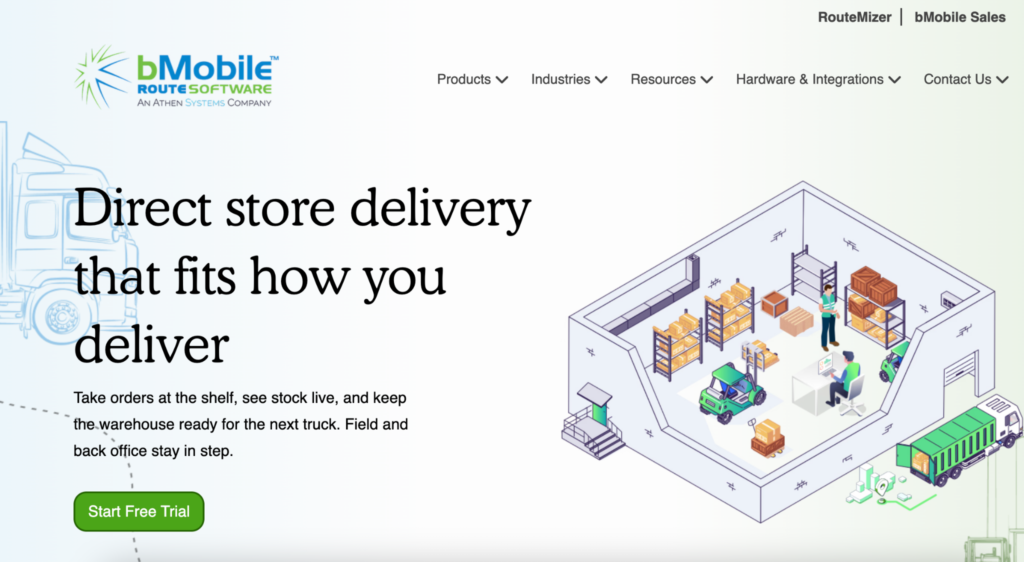
For distributors working in food and beverage, van sales usually involve much more than taking orders.
Drivers need accurate truck inventory, reliable route accounting, and delivery records that stay aligned with accounting and warehouse data. That’s where bMobile has developed a strong reputation over many years.
Its software focuses on operational efficiency rather than expanding into broader merchandising or customer engagement tools.
Core functionality includes:
- Van sales
- Route accounting
- Truck inventory
- Delivery management
- Mobile invoicing
- Warehouse integration
- Inventory tracking
- Operational reporting
Businesses already managing high-volume delivery routes often appreciate the platform’s mature workflows and industry-specific experience.
Worth considering when
Inventory accuracy and route accounting are more important than retail execution or customer-facing ordering portals.
3. LaceUp Solutions
Not every van sales business follows the same route. Some distributors work with independent retailers. Others deliver to large grocery chains where compliance requirements become part of every stop. LaceUp Solutions is designed with those more demanding delivery environments in mind, combining route accounting with mobile invoicing, truck inventory management, and support for DEX transactions.
The software has been serving wholesale distributors for years, making it a familiar option for businesses that prioritize operational control over modern interface design.
Key capabilities include:
- Van sales
- Route accounting
- Truck inventory
- Mobile invoicing
- DEX invoicing
- Delivery management
- Multi-ERP integrations
- Spanish-language support
Its biggest strengths appear in businesses with established delivery processes and more specialized operational requirements. Companies focused on retail execution or customer self-service ordering may find themselves looking elsewhere for those capabilities.
A smart choice for
Distributors supplying chain retailers or businesses that require advanced delivery accounting and DEX support.
4. RouteStar Solutions
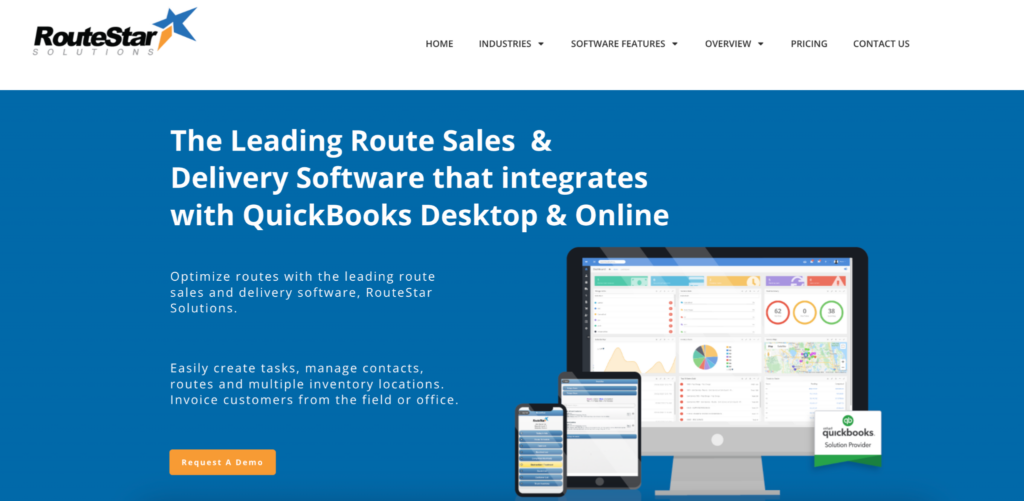
For many smaller distributors, van sales software doesn’t need dozens of advanced modules. It needs to work reliably every day and stay synchronized with accounting.
That’s exactly where RouteStar Solutions has built its reputation. The platform centers on route accounting, delivery management, truck inventory, and customer servicing while maintaining strong QuickBooks integration.
Instead of trying to cover every area of wholesale distribution, RouteStar stays focused on improving the daily work of drivers and route managers.
Its feature set includes:
- Route accounting
- Truck inventory
- Mobile invoicing
- Route mapping
- Delivery tracking
- Customer portal
- Two-way QuickBooks synchronization
That focused approach makes RouteStar relatively easy to understand for businesses that don’t require enterprise-level customization or extensive retail execution features.
Best suited to
Small and mid-sized distributors looking for dependable route accounting alongside their existing QuickBooks workflow.
How Van Sales Differs From Traditional Field Sales
Field sales representatives usually leave a customer with an order. Van sales representatives often leave with an order fulfilled.
That changes the software requirements considerably. Instead of simply capturing customer requests, van sales teams need visibility into truck inventory, pricing, invoicing, payment collection, and delivery records while they’re still standing inside the store.
Because every sale affects inventory immediately, delays in updating stock levels can quickly create problems for the next customer on the route. Software that connects inventory, invoicing, and accounting in real time helps reduce those issues and keeps drivers focused on selling rather than paperwork.
Must-Have Features for Truck Inventory Management
Truck inventory is one of the easiest places for small errors to become expensive. The right software should make it simple to see what’s available before arriving at a customer, record inventory changes as products are sold, and synchronize those updates with the rest of the business. Manual inventory adjustments at the end of the day often lead to discrepancies that become harder to trace over time.
When evaluating van sales software, look beyond inventory counts alone. Mobile invoicing, payment collection, proof of delivery, offline access, and accounting integration all contribute to keeping truck inventory accurate throughout the route rather than correcting mistakes afterward.
FAQ
What is van sales software?
Van sales software helps distributors manage mobile selling, truck inventory, invoicing, payments, customer visits, and delivery activities directly from a vehicle.
Is van sales software different from DSD software?
Van sales software focuses on selling products carried on the vehicle, while DSD software often covers broader delivery, route management, field sales, and operational workflows.
Why is offline access important?
Drivers frequently work in locations with limited internet connectivity. Offline functionality allows sales and deliveries to continue without interruption.
Can van sales software integrate with accounting systems?
Yes. Many platforms support QuickBooks or other accounting systems to synchronize invoices, payments, and customer records automatically.
The Best Van Sales Software Supports More Than Selling
Successful van sales routes depend on more than fast order entry. Drivers need accurate inventory, reliable invoicing, up-to-date customer information, and accounting records that stay synchronized throughout the day. Choosing software that brings those pieces together can reduce administrative work, improve customer service, and help every stop on the route run a little more smoothly.